
You’re Not Broken. You’re Just Burned Out.
S01E01
SPIRAL SEASON
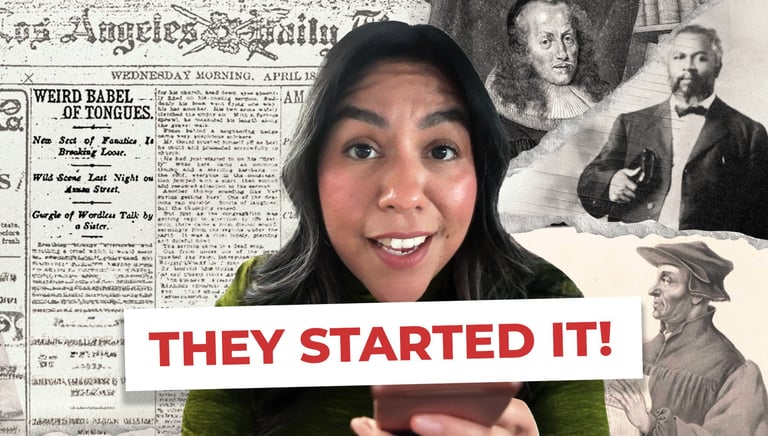
Revival culture is loud. It's intense. It's emotional. There's fog, there's lights, there's a shofar guy. Why is there always a shofar guy? Someone's getting a word about becoming the next Paul. A pastor is fired up about the end times. People are flooding the altar, emotionally wrecked, and convinced they're finally on fire for God.
Chasing the Noise
Like a lot of people, I was told that I was called to bring revival. That's literally me leading worship on those stages in skinny jeans with a borrowed sense of spiritual authority. We're told that this is how God shows up. This is what life in the Spirit looks like—that emotion equals anointing and that noise equals nearness.
But what if the thing we were told to chase is actually keeping us from the quiet, healing presence of a God who already came near?
Revival literally means to "make alive again" (re- again, vivere to live). For centuries, Christians have used that word to describe moments when sleepy communities of faith are jolted awake—sometimes with repentance, sometimes with emotional hype, sometimes with fog machines.
But the idea of revival as we know it—big emotional events, altar calls, urgency, soul quotas—didn't fall straight from heaven. It actually has a very specific historical trail, and you might be surprised to find out where it leads. Let's take a ride down the spiral slide to post-Reformation era Europe and oversimplify wildly.
From the Reformation to the Frontier
It's the 15th century and Europe is spicy. The church is selling indulgences like they're Black Friday deals, and a few folks are having none of it. We've got our homeboys Huldrych Zwingli up in Switzerland, Jan Hus, and of course, Granddaddy Luther in Germany. Unfortunately, they violently disagreed with each other, and the Reformation was basically a theological group project where everyone refused to use the same font. However, thanks to their fight, suddenly people are reading the Word for themselves. Iconic... until it's not.
So people got access to the Bible and then thought about it a lot. But some folks were like, "Hey, what if we just actually love Jesus?"
1. The Heart-First Movement (Pietism)
Enter the Pietists. Think of them as the heart-first girlies of Protestantism. Less about arguing, more about living it out. Philipp Jakob Spener was the dad of the movement, and he was out here calling people back to personal devotion, daily prayer, and a faith that you could actually feel.
Side Note: They're actually the blueprint for the radical conversion testimony format. That whole concept of "I was one way, but then Jesus..." Love them or hate them, they were out here doing the thing.
One of the most iconic groups within that Pietist movement were the Moravians—basically Pietism on espresso. They were communal, missionary-focused, and really, really into prayer. The result? They kicked off 24/7 prayer that lasted for over 100 years. Yeah, a century.
2. The First Great Awakening
Meanwhile, across the Atlantic, Puritans are fleeing persecution in England with a dream to build a holy society. Think cottagecore meets Leviticus. To their credit, they brought discipline, devotion, and some seriously rich theology—shout out John Owen and Richard Baxter. They also brought the Salem witch trials, so... mixed bag. But they were tilling the soil for what was about to be the First Great Awakening.
Cue Jonathan Edwards of Sinners in the Hands of an Angry God fame:
"For it is said that when that due time or appointed time comes, their foot shall slide, then they shall be left to fall, as they are inclined by their own weight. God will not hold them up in these slippery places any longer, but will let them go. And then at that very instant they shall fall into destruction..."
Sounds harsh, but people were deeply moved. They wept. They repented. Church services became something that you felt in your heart, not just in your back from those stiff pews. You didn't just hear the gospel; you felt it.
3. The Modern Revival Era
Then came the Second Great Awakening. This time it's bigger, bolder, and more democratic. Think camp meetings, traveling preachers, and mass conversions. Revival became eventized, structured, marketable, and repeatable. And the rest is history:
1906 (Azusa Street): Led by William J. Seymour. You've got tongues, healings, and radical racial integration. Go off—the birth of Pentecostalism. It was messy, it was beautiful, and for many, it was real.
1970s (The Jesus Movement): Chuck Smith and Lonnie Frisbee. Now the long-haired, barefoot crowd enters the group chat. They're tanned, they're tired of war and politics, and they want Jesus. Think Woodstock meets the Book of Acts.
Today (Viral Revival): From Bethel to Asbury. It's deeply moving, but also deeply exhausting.
The Endless Cycle
So what's the deal? Why do we keep doing this? Nearness, distance, outpouring, burnout. Crying at the altar, then crying in your car. When does it end? And why does it feel so familiar?
Maybe because it is. Israel lived this pattern long before we ever did. One generation remembers the Lord, the next forgets. Then comes hardship, then repentance, then a return and remembering... and then it fades again. Judges, Kings, Prophets, Exile, Return. Repeat.
The modern church didn't invent revival culture; we just branded it with fog machines and repeating bridges. But here's the thing: that cycle was never the goal. It was the warning. What if the real invitation has always been this: Stay. Stay near to the God who already drew near to us.
From Performance to Presence
I grew up thinking that if you loved God, you were supposed to do big things for Him. And I mean big. Preach to thousands. Save your school. Go on tour. Set your generation on fire. And your girl tried. I wrote songs about revival, sang at youth conferences, and people cried. Someone always said, "God is moving."
And maybe He was. But somewhere in all of that movement, no one told me you could do all those big things and still miss the quiet presence of a God who was never asking me to perform. I didn't know it was allowed to just be not on fire. Not called to the nations. Just me.
God didn't need my passion; He was offering me His presence. And I didn't find Him on a stage or in the crowds at the altar. I found Him in the face of a dying loved one, in the ache of rejection, and in the deep sorrow of wanting to disappear. That's the God who invites us not into performance, but into presence—daily, fully.
So is there anything wrong with wanting to see people encounter God? Of course not. That desire is beautiful, it's holy, and we've been gifted the ministry of reconciliation. It's who we are.
But what if revival culture is teaching us to chase the fire instead of trusting the flame that never goes out? We weren't called to results; we were called to faithfulness. Jesus spent thirty years in obscurity. Paul made tents to pay his bills. And the Spirit still moved, still sealed.
So maybe we don't need to shout louder or work harder. Maybe we just need to stay. Stay rooted. Stay open. Stay near. Just maybe, we were made for that.